Mold remediation in Columbus runs $1,500–$9,000 for most projects: the complete protocol: assessment, containment, removal, moisture correction, drying, and written verification. Against 47–48 inches of yearly rain and a marathon humid season, the protocol is what keeps the problem solved.
Each stage of real remediation, why the moisture stage is non-negotiable here, and how verification works.
Remediation is a protocol, not a product
The industry sells a lot of fog machines and miracle sprays. Real remediation is less photogenic: plastic sheeting hung right, air machines running for days, wet drywall leaving in bags, a moisture meter deciding when the job is finished. A good job follows EPA's framework stage by stage, and every stage produces evidence: photos before, during and after, and readings at the start and at clearance. The paper trail isn't bureaucracy. It's what makes the work checkable by you, your adjuster, or the next buyer of your house.
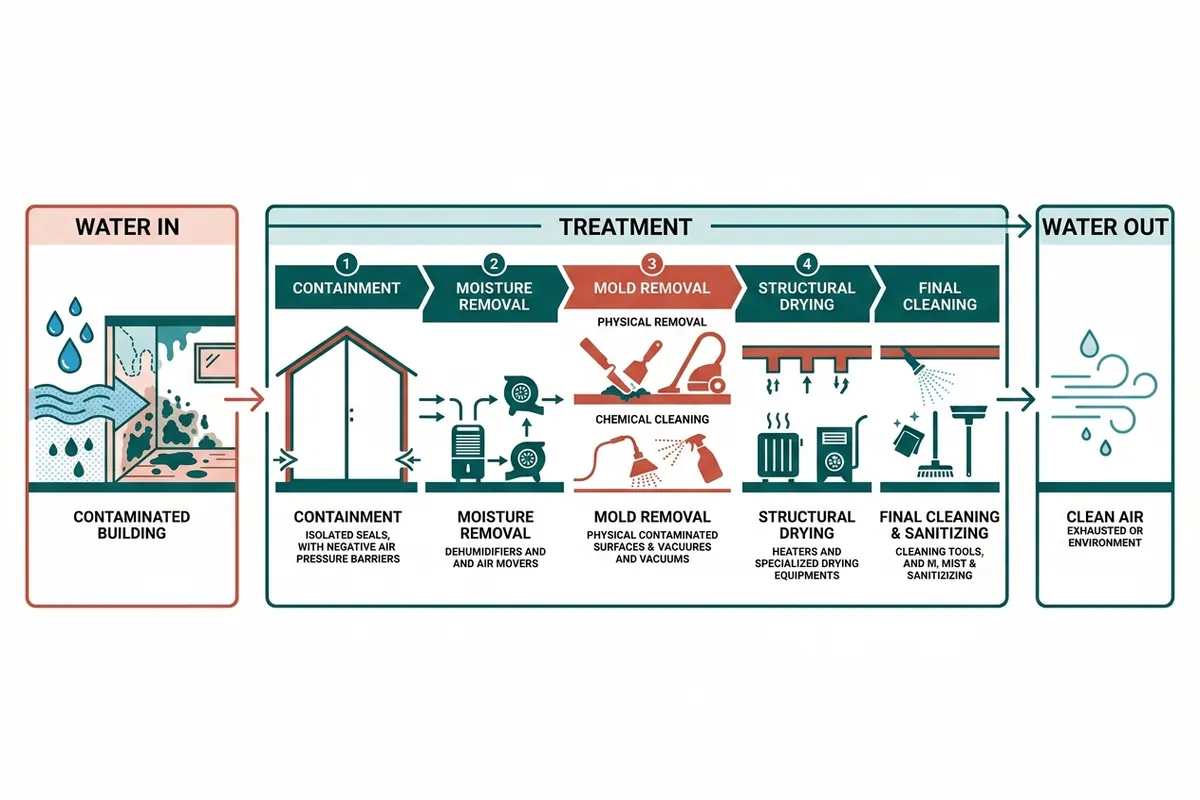
The six stages, in order
- Assessment: extent, cause, and materials mapped with photos and readings
- Containment: scaled to the project: from zipped doorway plastic to full negative-pressure zones
- Removal: porous contaminated materials out; structural surfaces cleaned and treated
- Moisture correction: the cause fixed; in this climate, the stage that decides everything
- Drying: dehumidification and air movement until readings hit targets, not until the schedule says stop
- Verification: written closeout with photos and numbers; third-party clearance testing when warranted
Why stage four rules this metro
In a dry climate, a skipped moisture fix might get away with it. Here, the humid season runs so long that any un-corrected feed (a sweating duct, a slow flashing leak, a bathroom venting into the attic) restarts growth within months. It's why a sound scope won't sell removal without naming the cause and its fix, and why the closeout should include the humidity targets the space has to hold. The colony you paid to remove shouldn't get a rematch.
Remediation versus basic mold removal
Plenty of jobs only need straightforward mold removal: a contained area, a simple cause, out in a day. Remediation is what the bigger stories require: growth across rooms or inside systems, causes that need real repair, insurance files that need every stage documented, clearance that needs proving. The inspection sorts which project you have, and the scope prices only the version your building needs. Before you sign, ask who pays if a removal turns into a remediation midstream because the walls held surprises. It is one more reason the moisture mapping should happen before the pricing does.
Either way, the standard is identical: containment before disturbance, HEPA filtration throughout, moisture corrected before closeout, and readings that prove the finish. The label on the project changes; the discipline doesn't.
Full remediation, staged like the pros define it
Remediation is removal plus everything that makes removal stick, and in this climate the "everything" is the job: source diagnosis (roof, plumbing, condensate, or ambient humidity. Each writes different work orders), containment sized to the finding, removal by material, treatment of what stays, drying to verified readings, and clearance that a re-test can defend. A fair scope names each stage with its price, because "mold job" is not a line item and the Valley's humidity punishes shortcuts in the second summer, every time.
The local pattern worth knowing: Columbus remediations trace to AC condensation more than any other single source, long cooling seasons mean months of coil condensate and duct-chilled surfaces meeting humid air. Any remediation here that doesn't inspect the air handler closet is leaving the most likely suspect uninterviewed.
What actually drives the price?
Two Columbus remediation jobs with the same square footage can price differently for reasons a homeowner can check themselves, and should before signing anything.
| Situation | What it means | The local multiplier |
|---|---|---|
| How far it spread | Square footage sets the containment and the labour | EPA's ten-square-foot line is where professional containment earns its cost |
| What it grew into | Drywall and insulation leave; framing cleans in place | In this climate insulation almost never survives. Budget for it leaving |
| Where it lives | Wall cavities and chases cost more than open surfaces | Fall-line housing hides growth in chases the long cooling season keeps damp |
| Whether the water is fixed | Remediation over an unfixed source is rework with a date on it | A quote that does not name the water source is pricing the visit, not the fix |
Typical whole-project work here runs $1,500-$9,000, and the written quote should tie every dollar to one of these four drivers. If it cannot, ask why.
Frequently asked questions
What's the difference between mold removal and remediation?
Removal is the act; remediation is the whole protocol: assessment, containment, removal, moisture correction, drying, and verification against written targets. Companies use the words loosely, so ask for a scope that spells out every stage so the words can't hide anything.
What standards does remediation follow?
EPA's mold remediation guidelines set the framework good work follows: containment scaled to the affected area, HEPA filtration, removal of contaminated porous materials, and moisture correction as a required stage, not an upsell.
How long does remediation take?
Small projects a day; room-scale two to four days including dry-down; major multi-room projects a week or more. The written scope should state the timeline and what 'done' means in readings.
Do we have to move out during the work?
Usually not. Containment exists precisely so the rest of the house stays normal. Large projects or HVAC involvement can change that answer, and a good scope says so up front.
Book a Columbus mold inspection
Tell us what you're seeing, whether spots on a wall, a musty room or a leak that got away, and we'll pass it to one independent local specialist, who can set up an inspection with moisture readings. If water is coming in right now, call (762) 309-1710.